
Video games: news, theory & analysis.
Video games: news, theory & analysis.
This was one of my talks at CES this year and covers kids, gaming, and tech.
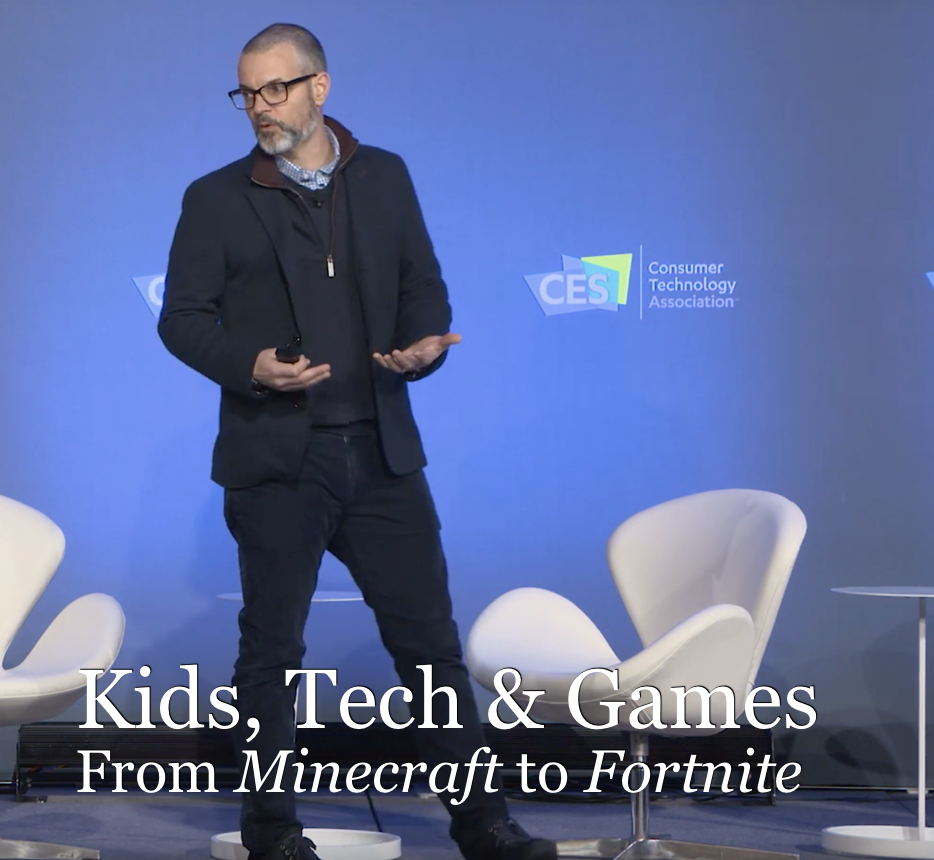 — read on
 — read on
Dit is een test. Ik wil namelijk even kijken of dit werkt en, zo ja, hoe moeilijk of makkelijk dit dan wel niet is. — read on
Next week I'm speaking at the Festival of Games in Amsterdam. It's a curious thing, really, considering how tiny Holland is, and yet how active its games industry is. There are only a handful of internationally known game companies, such as Guerrilla Games (Killzone!) and Spilgames. But there's a substantial number of small and medium-sized companies out there. So I figured I'd go and check it out. — read on
Finally, someone combined my two favorite hobbies: simulator games and dubstep. Sweet, sweet nectar. — read on
A few days ago the 7th Circuit Court of Appeals decided that Dungeons & Dragons presented a "threat" to prison security. Kevin T. Singer, an inmate at Wisconsin's Waupun Correctional Institution, was so devoted that it raised concern among the guards. He wrote, by hand, "a ninety six page manuscript outlining the specific details of a "campaign setting" he developed for use in D&D gameplay." For well over two years, no one thought twice about Singer's regular incoming stream of D&D mailings. This changed when Bruce Muraski, Waupun's "Disruptive Group Coordinator," received an anonymous letter from an inmate expressing concern
"that Singer and three other inmates were forming a D&D gang and were trying to recruit others to join by passing around their D&D publications and touting the “rush” they got from playing the game." (3)— read on
 Because I was trying to understand virtual items and micro-transactions, I researched the trading card industry. It made sense to me to consider the fundamentals from an industry that has been around for a while as a yard stick to relatively new terrain. (Yes, yes, looking forward through the rearview mirror. Thanks McLuhan. Now go back to bed.)
Today I found a similar parallel between the incentivized game design so common in social games (e.g. Farmville) and pinball machines.
— read on
Because I was trying to understand virtual items and micro-transactions, I researched the trading card industry. It made sense to me to consider the fundamentals from an industry that has been around for a while as a yard stick to relatively new terrain. (Yes, yes, looking forward through the rearview mirror. Thanks McLuhan. Now go back to bed.)
Today I found a similar parallel between the incentivized game design so common in social games (e.g. Farmville) and pinball machines.
— read on
Two days ago I submitted draft 2 of The Disseration (tm) at 3:00 am. After my committee had punched some initial holes in it, the whole thing is in much better shape. It even has a spiffy new title: Social Gaming and Discursive Play: Games as Communicative Exchange.
This dissertation shows that video games are a highly social phenomenon, because playing is a form of expression. Traditionally, however, the study of the phenomenon has focused primarily on their socially detrimental ‘effects.’ I argue that this is the result of applying a linear, informational model of communication in studying video games. In its place I offer a contextual approach, and situate contemporary video games in a larger set of media practices.
Conventional wisdom on video games makes the following two assumptions. The first is that play, leisure and games are frivolous activities that exist as separate realms from everyday life. The second is that games “cannot express ideas, impressions, feelings, or information unrelated to the game itself.” (Limbaugh 2002) Combined, this amounts to regarding the phenomenon of video games as a suspicious activity that encourages a-social behavior, varying between a loss of social capital and outright violent behavior.
— read on
Finally, someone combined my two favorite hobbies: simulator games and dubstep. Sweet, sweet nectar....

First person perspective is highly symbolic of the subjective point of view from which we, faced an ...

Insert your favorite French philosopher's musings on co-existing meta-realities here. Then stop bein...

The cure for the common GTA clone. Heck, the Hulk puts GTA to shame. One enjoys roaming one's h...

After this illustrious example of hilarity, I've now also located a Dutch sesame street remix, web 2...